原文核对:2026-10-13 · 中文正文 · 英文提示词与演示
场景定位
检查样本表、FASTQ 和参考序列,返回 MultiQC、Salmon 矩阵、来源记录和 QC 解读,再进入差异表达分析。
- 难度
- 中级
- 时间跨度
- 长时间运行
适合用于
- 差异表达分析前检查输入的生信团队。
- 希望在同一对话中完成转录本与基因定量及 QC 的研究者。
- 需要审阅比对率、重复、文库类型和资源就绪情况的团队。
相关工具
验证测序输入,运行 bulk RNA-seq 计数与 QC,返回可审计产物。
NGS Analysis ↗起步提示词
英文原文 · 可复制后按实际材料修改
Use the NGS Analysis plugin.

Run bulk RNA-seq FASTQ-to-count QC on the provided sample sheet, FASTQ root, transcriptome FASTA, genome FASTA, and GTF.

Return:
- run_manifest.json
- MultiQC plus browser-safe review links
- Salmon transcript- and gene-level matrices
- validation and resource-readiness artifacts
- a short QC interpretation that calls out mapping rate, duplication, library-type agreement, outlier samples, and anything that would block downstream differential expression
使用技能
NGS Analysis 包含:
- 技能 ngs-analysis-router。
- 技能 ngs-bulk-rnaseq-counts-qc。
- 技能 ngs-runtime-env。
使用插件时可调用这些技能。
操作步骤
- 提供含样本表、FASTQ、转录组 FASTA、基因组 FASTA 和 GTF 的目录,或准确文件引用。
- 用起步提示词在执行前检查链特异性、参考一致性和工具就绪情况。
- 打开 MultiQC 与矩阵,检查比对率、重复、文库类型一致性和资源准备。
- 继续修复阻碍、更新元数据后重跑,或把基因级矩阵交给下游差异表达分析。
结果
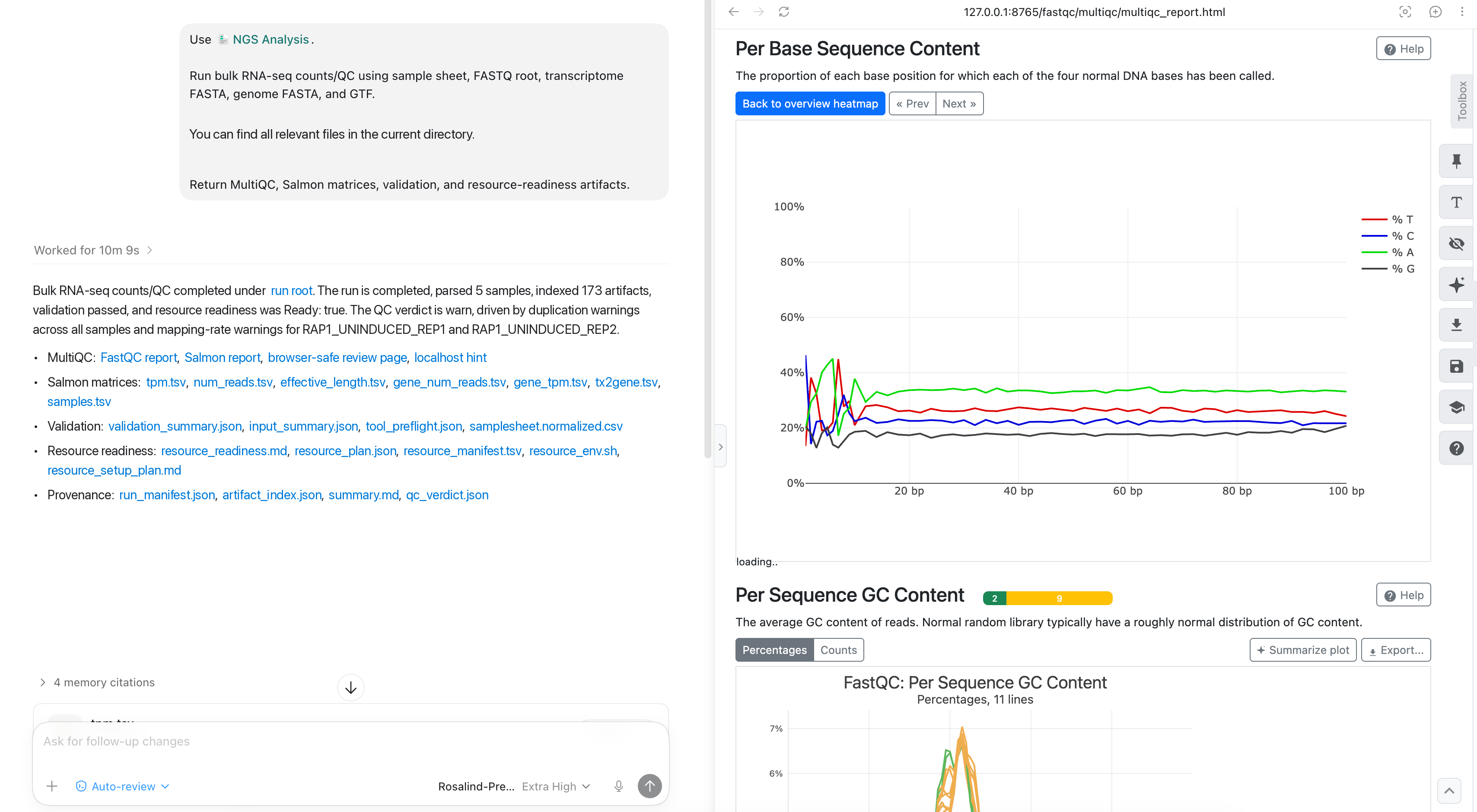
返回经过 QC 审阅的计数包。先看 MultiQC 警告;本例在运行摘要旁呈现 FastQC 序列组成警告,供团队判断是否符合建库预期。
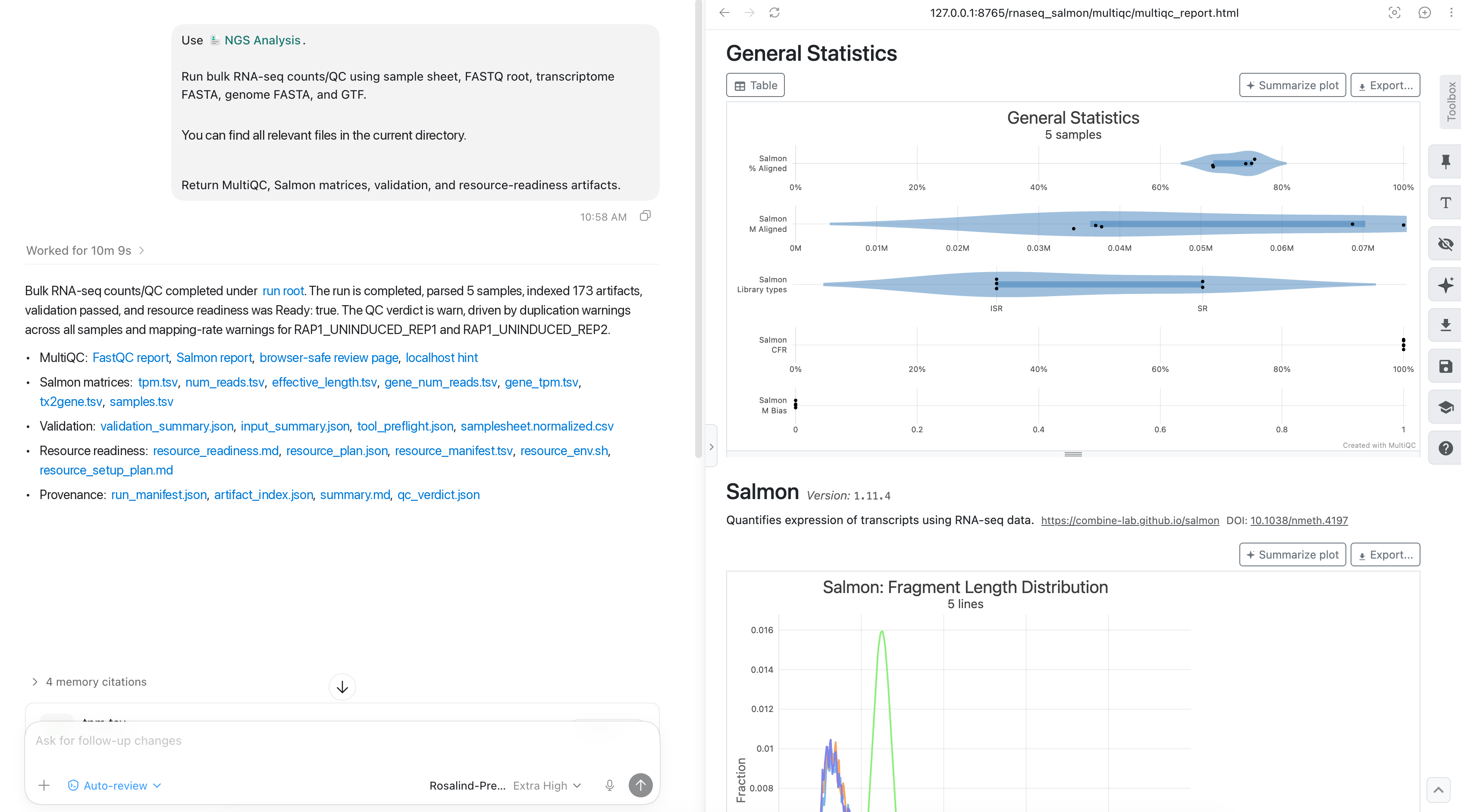
再检查同一报告的 Salmon 统计,以比对率、文库类型和重复信号判断是否准备好进入差异表达。
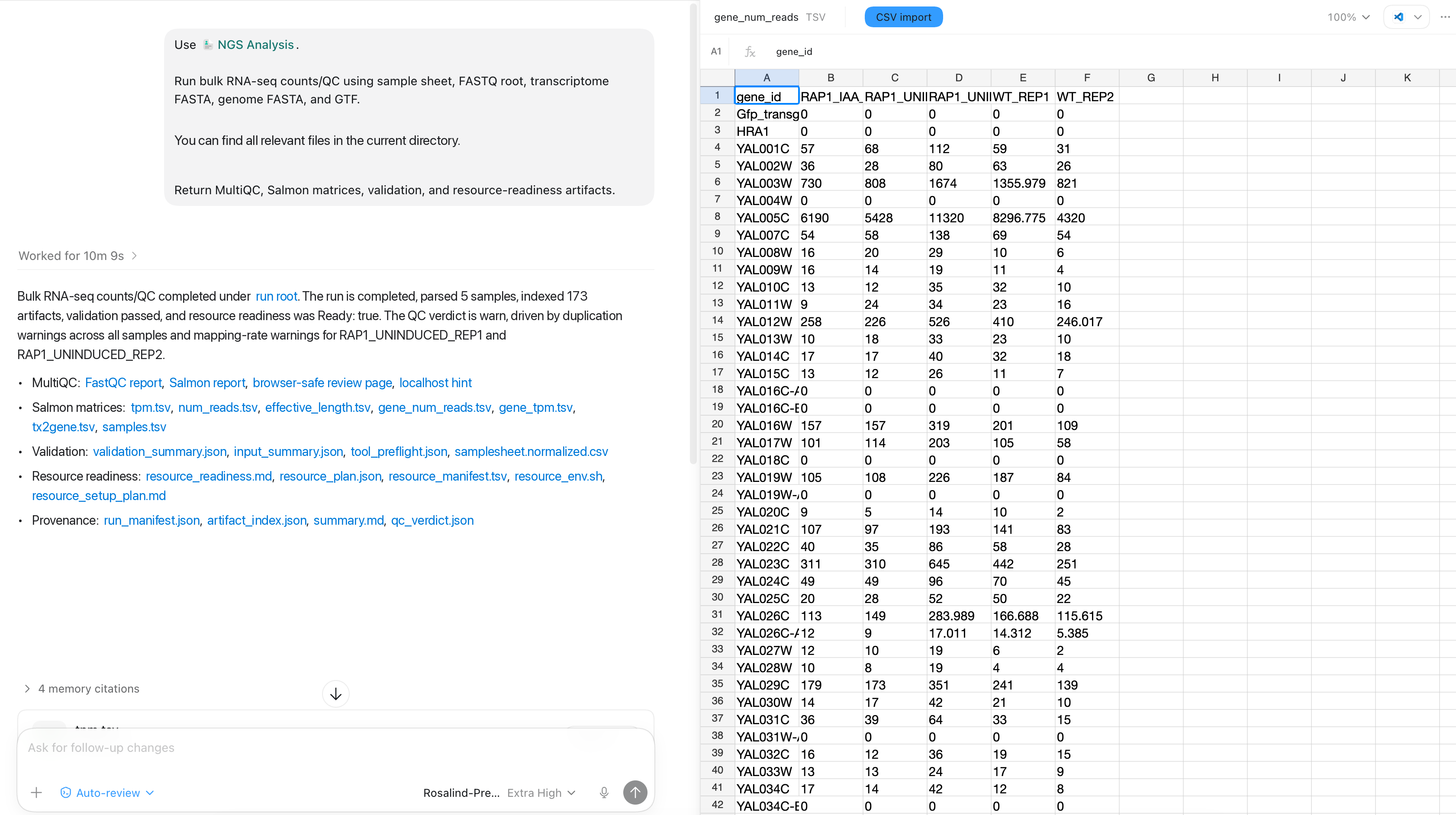
基因级计数矩阵作为可复用产物保存,打开确认样本和特征齐全,再与运行来源记录一起用于下游分析。
展开英文原文对照
Use ChatGPT with the NGS Analysis plugin to validate sample sheets, FASTQs, and references, then return MultiQC, Salmon matrices, provenance, and a short QC interpretation before differential expression.
Leverage skills
The NGS Analysis plugin includes:
- ngs-analysis-router
- ngs-bulk-rnaseq-counts-qc
- ngs-runtime-env
When you use the plugin, ChatGPT can use all these packaged skills.
Step-by-step guide
- Point ChatGPT to a directory with the sample sheet, FASTQs, transcriptome FASTA, genome FASTA, and GTF, or provide exact file references.
- Run the starter prompt so ChatGPT can validate strandedness, reference consistency, and tool readiness before execution.
- Open the generated MultiQC and matrix artifacts in ChatGPT to review mapping rate, duplication, library-type agreement, and resource readiness.
- Continue in the same chat to fix blockers, rerun with updated metadata, or hand the resulting gene-level matrices into downstream differential expression.
Results
The run returns a QC-reviewed counts bundle rather than a bare quantification output. Start with the MultiQC report to identify warnings that could affect downstream interpretation. In this example, ChatGPT surfaces FastQC sequence-content warnings alongside the run summary so the team can decide whether the observed pattern is expected for the library preparation.
Next, review the Salmon statistics in the same report. Mapping rates, library-type assignments, and duplication signals provide a compact readiness check before differential expression.
The resulting gene-level count matrix is saved as a reusable artifact. Open it in ChatGPT to confirm the expected samples and features are present, then keep it with the run provenance for downstream analysis.